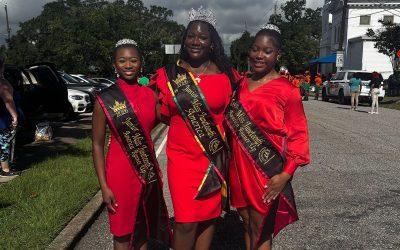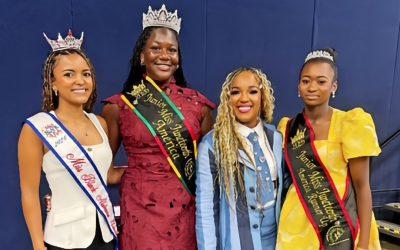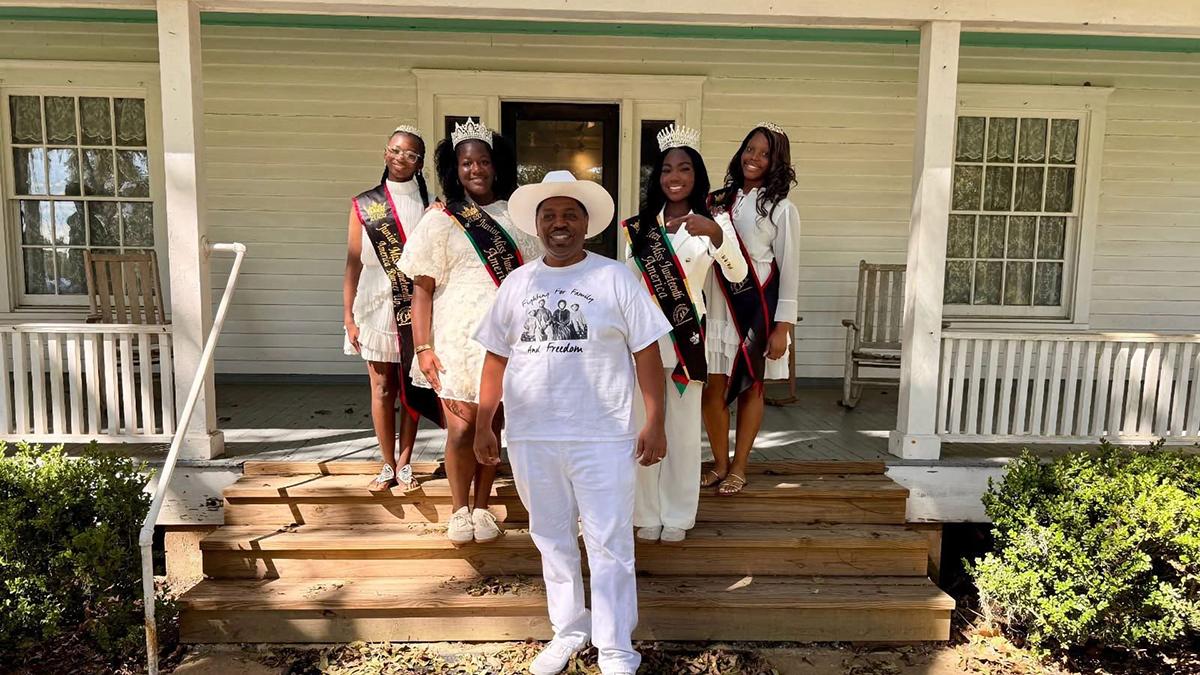
From October 16–18, 2026, four Miss Juneteenth America representatives took part in the 2026 Freedom Journey to Galveston, Texas, an immersive experience centered on education, Juneteenth history, cultural identity, leadership, and legacy.
Queen Erin Hammond, Junior Miss Juneteenth America 2026; Queen Tammy Maku, Teen Miss Juneteenth America 2026; Ms. Cayliegh Humphrey, Teen Miss Juneteenth America 2026 First Runner-up; and Ms. Miley Jones, Junior Miss Juneteenth America 2026 First Runner-up each reflected on how the journey changed the way they understood college, freedom, leadership, and their responsibility to carry history forward.
For the young women, the Freedom Journey was not simply a trip. It was a three-day experience that connected higher education, historic places, community storytelling, and personal reflection in ways that made Juneteenth feel more immediate, more personal, and more relevant to their own leadership journeys.
Beginning the Journey at Texas Southern University
The Freedom Journey began on Friday, October 16, with a visit to Texas Southern University, where the representatives experienced an HBCU campus environment and explored what higher education could look like for them.
For Cayliegh, the visit made her future goals feel more attainable. She was especially drawn to the Honors College because it showed her that academic discipline and a strong GPA could open additional opportunities. The campus helped her imagine herself succeeding in college in a more concrete way.
Miley also saw the university visit as a reminder that education can create opportunities. The health and science programs stood out to her because of the many ways those fields can be used to help others and improve lives.
Queen Erin Hammond: Seeing Black Excellence and Future Possibility
For Erin, Texas Southern University represented something larger than academics.
She was struck by the Black excellence she saw throughout campus and by the number of young African American students pursuing their goals while representing their culture with pride.
Erin also had the opportunity to meet members of the university’s royal court, including Miss Freshman, Miss Sophomore, Miss Junior, and Miss Senior. Their advice about leadership, responsibility, confidence, and grace resonated with her because she understands those same responsibilities through her own title.
The visit also helped Erin identify the kind of college environment she wants in the future: one where strong academics are paired with community, support, belonging, and cultural pride.
Her interest in biology became even more meaningful during the tour because of her goal of becoming a nurse. Seeing the science laboratories helped her picture how college study could prepare her for a future in healthcare.
Queen Tammy Maku: Leadership, Networking, and a Future in Media
Tammy also connected strongly with Texas Southern University’s royal court and campus organizations.
She reflected on the importance of poise, networking, and building relationships and could envision herself participating in campus life through leadership opportunities such as a royal court or student ambassador program.
The visit also strengthened her interest in broadcast journalism. Tammy expressed interest in radio and television, podcasting, filmmaking, and communication as possible areas of study and future career development.
For her, college became not only a place to earn a degree, but also a place to build community, step outside of her comfort zone, and connect with people who can help shape her growth.
Galveston: Where History Became Tangible
On Saturday, October 17, the journey moved more deeply into Galveston’s history.
Each representative described the city as a place where history became more real because they could connect what they had learned with actual places, stories, landmarks, and community institutions.
Miley described Galveston as a place where history comes alive. Knowing the city’s connection to Juneteenth made the experience especially meaningful and helped her better understand why those stories must continue to be remembered.
Cayliegh reflected on Galveston’s cultural pride, landmarks, and sense of community, while Erin described the city as welcoming and deeply connected to freedom, remembrance, and African American history.
Learning About the Hardships Behind Freedom
The historic sites made a particularly strong impact on Cayliegh and Erin.
Cayliegh reflected on visiting a plantation site and how seeing the physical setting gave her a deeper understanding of the emotional, psychological, and physical oppression enslaved people endured. She also reflected on how fear, punishment, and harm to loved ones could be used as tools of control.
Erin similarly described how being outside in difficult conditions during a plantation visit gave her a small glimpse into the physical hardships enslaved people faced for far longer periods.
She also learned more about what happened after slavery legally ended, including systems that continued to restrict Black freedom and exploit African Americans through incarceration and forced labor. For Erin, that lesson made clear that emancipation did not automatically bring equality.
Queen Tammy Maku: Education as a Legacy Worth Protecting
One of Tammy’s most meaningful experiences was seeing a yearbook connected to an early African American high school and reflecting on the generations who fought for access to education.
That moment made her think about how far previous generations had come and how much persistence had been required to create opportunities that young people now have.
She also reflected on community leadership and the idea that lasting progress comes through investing in people over time.
For Tammy, those lessons connected directly to education, leadership, and her responsibility to make full use of the opportunities available to her.
Miley Jones: Connecting School Lessons to Real Places
For Miley, the Juneteenth Heritage Tour had the greatest impact because it connected what she had learned in school with real places.
Plantation tours, museum visits, and community storytelling helped her better understand both the hardships African Americans endured and the perseverance they demonstrated in the struggle for freedom.
The experience helped her see Juneteenth as both a celebration and a reminder.
It celebrates freedom, but it also asks each generation to remember what that freedom cost and why those stories should not disappear.
Leadership Lessons From the Freedom Journey
By Sunday, October 18, the focus of the journey had moved toward leadership, reflection, and what the representatives would carry home.
Cayliegh described feeling especially proud at the Nia Cultural Center because she saw a direct connection between youth empowerment, cultural education, and the type of impact she hopes to make through her own platform.
She also came away with a stronger sense that her generation has a responsibility to understand and share cultural history.
For Erin, the leadership lesson was about representing culture with pride and recognizing that leadership means more than holding a title.
She reflected that leadership also means standing for what is right, honoring those who came before you, and using your voice to inspire others.
Miley reached a similar conclusion: understanding history can help young people become better leaders because the stories of courage, service, and perseverance from the past can shape how they lead in the present.
Queen Tammy Maku: Passing the Baton to the Next Generation
Tammy’s reflections connected strongly to her ongoing message of passing knowledge and opportunity forward.
She spoke about learning that leadership requires balance, responsibility, and sometimes the willingness to say no in order to fulfill a larger role well.
She also expressed a clear intention to share what she learned with middle school and elementary students so that younger generations understand the history of Juneteenth and the realities endured by their ancestors.
For Tammy, the Freedom Journey strengthened the idea that leadership is not complete unless knowledge is passed forward.
Four Young Women, Four Words for the Journey
Each representative chose a different word to describe what the experience meant to her.
Cayliegh chose “deepening” because the journey expanded her understanding of topics she might not otherwise have encountered in such detail.
Erin chose “empowering” because learning what her ancestors endured reminded her that she is part of a powerful legacy and can continue building on that history through education and leadership.
Miley chose “meaningful” because every part of the journey—from the university visit to the heritage experiences and worship service—gave her a deeper understanding of Juneteenth.
Tammy chose “inspiring” because the perseverance of previous generations motivated her to pursue education, use her voice, and become a stronger leader for those coming behind her.
Together, those four words capture what the Freedom Journey became: deeper understanding, empowerment, meaning, and inspiration.
The Connection Between Mobile and Galveston
The representatives also reflected on the historical relationship between Mobile, Alabama, and Galveston, Texas.
Erin connected Galveston’s Juneteenth history with Mobile’s Africatown and the story of the Clotilda, seeing both places as important reminders of African American resilience, freedom, and the responsibility to preserve history.
Cayliegh similarly reflected that both cities tell parts of a larger story about what African Americans endured and how communities continue working to preserve culture and history.
Miley described the two cities as places that together help tell a story of resilience, freedom, and ancestral legacy.
Tammy, who has experienced both Alabama and Texas through the program, reflected on how different the places felt while recognizing one shared theme: previous generations continued moving forward despite immense hardship.
What the Representatives Will Carry Home
The Freedom Journey did not end when the trip ended.
Each representative described a responsibility to take what she learned back to her school, family, and community.
Cayliegh reflected on the need to better appreciate the opportunities made possible by previous generations and to share those lessons with others.
Erin plans to talk about African American history not only during Juneteenth or Black History Month, but whenever opportunities arise at school, in the community, and in conversations with family and friends.
Miley plans to encourage others to learn more about Juneteenth so the stories behind the holiday remain alive.
Tammy plans to teach younger students what she learned and continue passing the history and lessons of Juneteenth to the next generation.
Advice for Future Freedom Journey Participants
The representatives also shared advice for the young women who will experience the journey in future years.
Cayliegh encouraged them to pay close attention because even students with strong educational backgrounds may encounter information they have never learned before.
Erin encouraged future participants to be themselves, keep an open mind, learn as much as possible, and value the friendships that grow along the way.
Miley encouraged them to listen, ask questions, and understand that every activity carries a lesson.
Tammy emphasized that participants should understand the history and meaning behind the program itself. For her, the journey reinforces why Miss Juneteenth America is about far more than competition.
More Than a Pageant. A Living Chapter of American History.
The 2026 Freedom Journey to Galveston reflected the heart of Miss Juneteenth America:
More Than a Pageant. A Living Chapter of American History.
For Queen Erin Hammond, Queen Tammy Maku, Ms. Cayliegh Humphrey, and Ms. Miley Jones, the journey connected education with history, history with identity, and identity with leadership.
They returned with a deeper appreciation for higher education, a stronger understanding of Juneteenth, greater respect for the sacrifices of their ancestors, and a clearer sense of responsibility to share what they learned.
The Freedom Journey showed them that preserving history is not passive.
It requires listening, learning, asking questions, telling the stories accurately, honoring those who came before, and helping the next generation understand why freedom, education, culture, and leadership still matter.
And in that sense, the journey did exactly what its name promised.
It moved them forward.